.png)


Why timing is everything in international flower shipping

Timing starts before flowers arrive
Freshness management begins before flowers enter the building. Orders are planned around auction times, grower delivery windows, and fixed flight departures from Schiphol Airport. Flowers are brought in as late as responsible, not as early as possible.
This limits unnecessary waiting and reduces exposure outside controlled environments. Less idle time means less stress on the product, even before handling begins.
One continuous, controlled flow
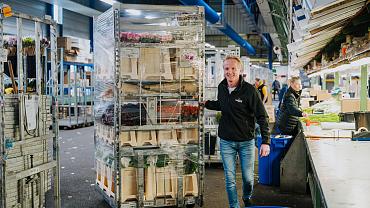
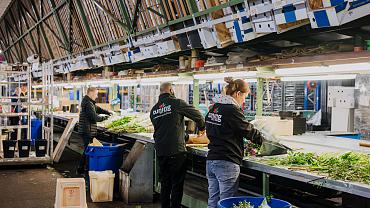
Once flowers arrive at Tuning’s facility, they move through a single, continuous process. Handling and packing take place in a climate-controlled workspace maintained at around 61°F (16°C). Flowers are sorted, checked, and packed without interruption.
After packing, each box goes directly into vacuum cooling. Cooling happens after the shipment is complete, so the internal temperature of the entire box drops evenly to around 39°F (4°C). This step slows natural aging and helps prevent condensation during transport.
From there, shipments return to cold storage. There are no temperature gaps and no intermediate holding areas. Every handover is planned.
Cooling is not a final step
At Tuning, cooling is not something that happens once. It is maintained until the moment of departure. After vacuum cooling, shipments remain in cold storage until transport is ready. Only then are they released for air freight.
This approach minimizes temperature fluctuations, one of the most common causes of quality loss during international transport. Waiting is not avoided. It is controlled.
Flight selection as a quality decision
Flights are selected based on freshness outcomes, not simple availability. Departure times, ground handling speed, and arrival timing all influence quality at destination.
Missing a planned departure often means a shipment waits in cold storage overnight. That decision is never taken lightly, because it directly affects shelf life. Timing, in this sense, is not a logistical detail but a quality commitment.
Monitoring beyond departure
For long-distance shipments, especially outside Europe, temperature and GPS recorders are included. Conditions are monitored throughout the journey, from warehouse to arrival.
This data confirms that the cold chain remains intact and allows adjustments where needed. Freshness is not assumed. It is verified.
Timing as a working principle
At Tuning, timing is treated as a working principle, not a promise. Every step, from planning and packing to cooling and flight selection, is connected. When that sequence is respected, flowers arrive as intended. That is why timing is not just important in international flower shipping, it is decisive.
News